
How social meedia brings bands and people together
Introduction
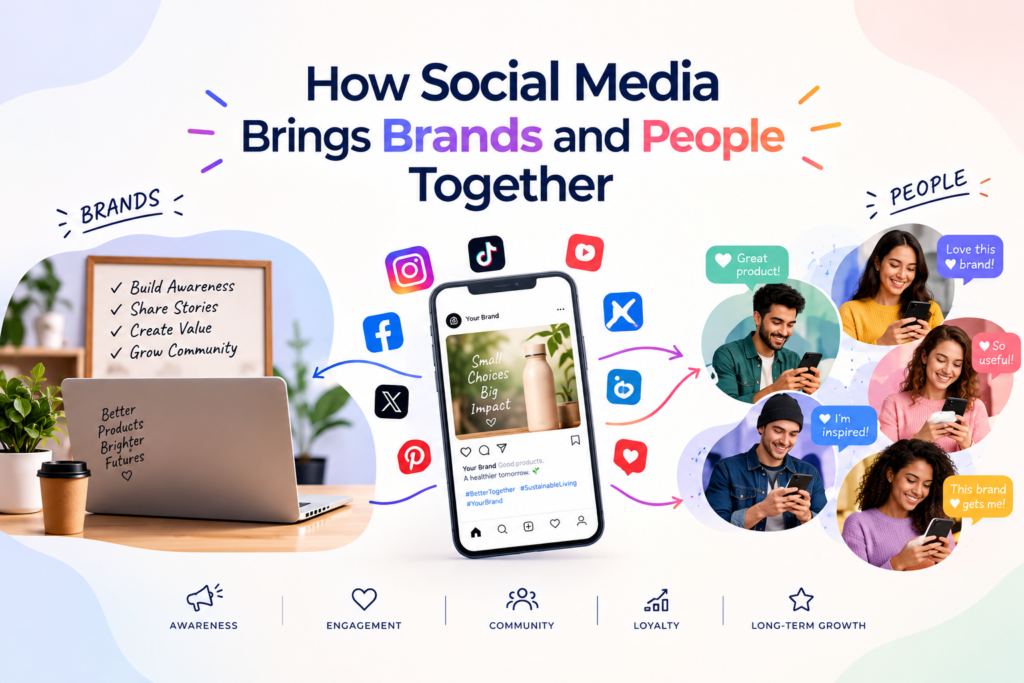
In today’s digital world, social media has become an important part of everyday life. People use social platforms to communicate, discover new products, learn about brands, and share their experiences. For businesses, these platforms provide valuable opportunities to connect with potential customers and build a strong online presence.
Social Media Marketing (SMM) is the process of using social media platforms to promote a brand, product, or service. It involves creating engaging content, interacting with followers, building brand awareness, and developing relationships with an audience.
Whether a business is a small startup, a local shop, or an established company, social media marketing can help it communicate its message and reach relevant audiences. With creativity, consistency, and a clear strategy, businesses can use social media to support their marketing goals.
What Is Social Media Marketing?
Social media marketing involves planning, creating, publishing, and analyzing content on social platforms. It can include organic activities, such as posting reels and responding to comments, as well as paid activities, such as running advertisements.
The main purpose is not simply to collect likes or followers. It is to reach the right people, encourage meaningful engagement, communicate a brand’s value, and support business objectives.
For example, a clothing brand may publish product photographs and styling videos, while a restaurant may share food videos, customer reviews, and special offers. Each business can use content that reflects its identity and appeals to its target audience.
An effective social media strategy combines attractive content with audience understanding, regular communication, and performance measurement.
Why Is Social Media Marketing Important?
Social media allows businesses to communicate directly with their audiences. Unlike some traditional marketing methods, it gives people opportunities to respond, ask questions, share feedback, and participate in conversations with brands.
It also helps businesses show their personality. Through consistent visuals, useful posts, and authentic communication, a brand can develop a recognizable identity.
Social media can support several goals, including increasing brand awareness, directing visitors to a website, generating enquiries, promoting products, and maintaining relationships with existing customers.
However, success does not happen overnight. It requires understanding the audience, publishing relevant content, and improving the strategy based on actual results.
Popular Social Media Platforms for Marketing
1. Instagram Marketing
Instagram is a visual platform that helps businesses present their products, services, and brand identity through photographs, reels, stories, and carousel posts.
Reels can be used to demonstrate products, share tutorials, present behind-the-scenes moments, or explain useful ideas. Stories are helpful for sharing updates, asking questions, and communicating more casually with followers.
A consistent visual style, clear captions, relevant keywords, and engaging content can help businesses create a professional Instagram presence.
For example, a digital marketer could publish marketing tips, website design examples, content creation ideas, and short educational reels to demonstrate their knowledge.
2. Facebook Marketing
Facebook offers businesses opportunities to share updates, publish videos, create business pages, communicate with customers, and run advertising campaigns.
It can be especially useful for local businesses that want to share service information, answer customer questions, announce offers, or reach people in particular areas.
Businesses should ensure that their page contains accurate contact details, useful information, and content that reflects their services.
3. YouTube Marketing
YouTube is suitable for longer videos, tutorials, demonstrations, educational content, and product reviews.
Businesses can use YouTube to explain complex topics, demonstrate how products work, and develop a library of useful videos. Short-form videos can also help introduce a brand to new audiences.
4. LinkedIn Marketing
LinkedIn is a professional networking platform that can help businesses build industry credibility, share professional insights, connect with other businesses, and highlight their services.
It is particularly relevant for professional services, business-to-business marketing, career development, and personal branding.
Benefits of Social Media Marketing
Increased Brand Awareness
Social media gives businesses opportunities to introduce themselves to new audiences. Helpful posts, creative videos, and shareable content can make a brand more recognizable.
Direct Audience Engagement
Comments, messages, polls, and question features allow businesses to interact with customers. Responding thoughtfully helps brands understand audience needs and maintain communication.
Website Traffic and Enquiries
Businesses can use social content to guide interested people toward their websites, service pages, product catalogues, or contact information.
Clear calls to action help users understand what to do next.
Cost Flexibility
Creating organic content can be a practical starting point for businesses with limited budgets. Paid advertising is another option when businesses want to reach specific audiences, although advertising costs and results vary.
Customer Insights
Social platforms provide analytics about reach, engagement, video views, and other performance indicators. These insights help marketers understand which content attracts attention and encourages interaction.
Stronger Brand Identity
Using consistent colors, visual styles, messaging, and tone can make a brand easier to recognize. A clear identity also helps communicate what the business stands for.
How to Create an Effective Social Media Strategy
Step 1: Set Clear Goals
Decide what the business wants to achieve. Goals may include improving brand awareness, increasing website visits, generating leads, or promoting a new product.
Step 2: Understand Your Target Audience
Identify the people most likely to be interested in the business. Consider their needs, interests, challenges, and preferred social platforms.
Step 3: Plan Your Content
Develop a content calendar to organize post ideas and publishing dates. Include a mix of educational posts, promotional content, entertaining videos, and brand-related stories.
Step 4: Create Engaging Content
Use clear messages, relevant visuals, and useful information. Short videos, carousel posts, and simple educational graphics can help communicate ideas effectively.
Step 5: Maintain Consistency
Publish content regularly at a manageable pace. Consistency helps maintain an active presence, but quality and relevance should remain priorities.
Step 6: Interact With Your Audience
Respond to comments and messages appropriately. Encourage meaningful conversations and use audience feedback to improve future content.
Step 7: Measure Your Results
Review metrics that match your goals. For example, track reach for awareness campaigns, link clicks for website traffic, and qualified enquiries for lead generation.
Use these insights to improve your content and strategy over time.
Common Social Media Marketing Mistakes to Avoid
Businesses sometimes focus only on follower counts instead of meaningful results. They may also post without a clear plan, ignore customer messages, use irrelevant hashtags, or publish overly promotional content.
Another common mistake is copying competitors without developing a unique brand identity.
To avoid these problems, businesses should create content with a purpose, communicate honestly, protect customer privacy, and focus on genuine engagement rather than artificial growth.
The Future of Social Media Marketing
Social media marketing continues to change as platforms introduce new features and audience preferences evolve. Short-form videos, creator partnerships, social commerce, community building, and AI-assisted content creation are influencing marketing strategies.
AI tools can help with brainstorming, caption drafting, and content planning, but human review remains important. Businesses must ensure that published content is accurate, original, appropriate, and consistent with their brand values.
Brands that stay adaptable and focus on audience needs can respond more effectively to changing trends.
Conclusion
Social media marketing is more than posting photographs and collecting likes. It is a strategic way to build brand awareness, connect with customers, share valuable content, and support business growth.
By choosing suitable platforms, understanding the target audience, creating engaging content, maintaining consistency, and measuring performance, businesses can develop a stronger online presence.
The most effective approach combines creativity with a clear purpose. When brands focus on providing value and building genuine relationships, social media becomes a meaningful part of their digital marketing strategy.
Create meaningful content. Build real connections. Grow your brand online.